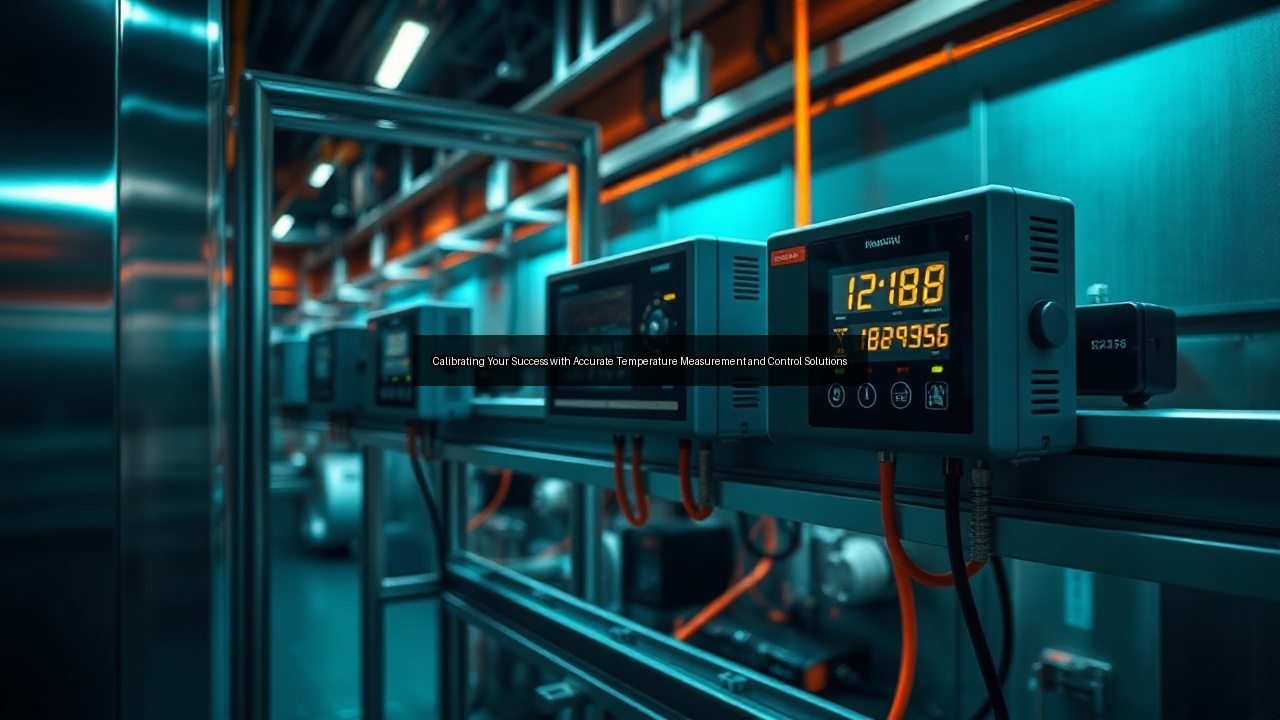
Calibrating Your Success with Accurate Temperature Measurement and Control Solutions
Understanding Temperature Control Solutions
The Importance of Accurate Temperature Measurement
Accurate temperature measurement plays a critical role in various industrial processes. In industries like food processing, pharmaceuticals, and manufacturing, even minor temperature fluctuations can lead to quality issues or product failures. A reliable process temperature controller ensures that operations run smoothly, maintaining both efficiency and safety standards. Precision matters; it affects product quality, energy consumption, and compliance with regulatory requirements. Implementing effective temperature measurement solutions not only enhances product integrity but also optimizes operational costs. Therefore, investing in high-quality temperature measurement devices is essential for businesses aiming to calibrate their success.
Types of Temperature Measurement Devices
Various temperature measurement devices cater to different industrial needs. Thermocouples and infrared sensors are among the most common. Thermocouples utilize the thermoelectric effect to measure temperature, making them ideal for extreme conditions. They come in different types, such as Type K and Type J, suited for various applications. Infrared sensors, on the other hand, offer non-contact measurement, allowing temperature readings without interfering with the process. This method is especially useful in scenarios where physical contact with the object isn’t possible or practical. Other devices include RTDs (Resistance Temperature Detectors) and thermistors, each offering unique advantages in specific situations. The choice of device impacts overall temperature control and measurement accuracy.
Exploring PID Control in Temperature Management
PID control, which stands for Proportional-Integral-Derivative control, is a cornerstone in temperature management. This control algorithm adjusts the output of a process temperature controller based on the difference between the desired setpoint and the measured temperature. By using a combination of proportional, integral, and derivative calculations, PID controllers maintain a stable temperature, minimizing overshoot and oscillation. This level of precision is crucial in applications like reactor temperature control or HVAC systems, where even slight deviations can lead to significant issues. Understanding and implementing PID control can enhance automation processes, improve energy efficiency, and ensure product quality.
Key Components of Process Temperature Controllers
Thermocouples and Their Role in Temperature Sensing
Thermocouples serve as vital components in process temperature controllers. They consist of two dissimilar metals joined at one end, creating a voltage that correlates with temperature changes. Their robustness and wide temperature range make them ideal for industrial applications. Thermocouples can withstand harsh environments, thus providing reliable data for temperature measurement and control. They are often used in conjunction with PID controllers to maintain precise temperature settings in processes like heating, cooling, or material processing. Choosing the right thermocouple type and ensuring its proper placement can significantly enhance the effectiveness of temperature control solutions.
Understanding RS-485 and Modbus Communication
Communication protocols are crucial for effective temperature control in automated processes. RS-485 is a widely used standard for industrial communication, allowing multiple devices to connect over long distances. This protocol supports multi-drop connections, making it ideal for large setups requiring numerous temperature controllers. Modbus, a communication protocol that operates over RS-485, facilitates data exchange between devices like PLCs (Programmable Logic Controllers) and temperature controllers. Implementing RS-485 and Modbus ensures seamless integration of process temperature controllers within a broader automation framework, allowing for real-time monitoring and control of temperature parameters across multiple locations.
Different Mounting Styles: DIN Rail vs. Panel-Mount vs. Surface-Mount
Temperature controllers come in various mounting styles to suit different installation environments. DIN rail-mounted controllers offer a compact solution that simplifies installation and maintenance in electrical panels. They are widely used in industrial settings due to their space-saving design. Panel-mount controllers provide a user-friendly interface, often featuring digital displays for easy monitoring. Surface-mount options allow for flexible placement on walls or machinery, making them versatile for various applications. Choosing the right mounting style impacts accessibility, aesthetics, and overall efficiency of temperature control systems. Each option has its benefits, and selecting the right one enhances operational effectiveness.
Evaluating Controller Options for Precision and Automation
PID Controller Options: Features and Benefits
Choosing the right PID controller is essential for achieving accurate temperature management. Modern PID controllers come equipped with advanced features, including auto-tuning capabilities that simplify setup and optimization. Many models offer digital displays, allowing operators to monitor real-time data easily. Features like alarm functions, logging capabilities, and network connectivity enhance the functionality of these controllers, making them suitable for a wide range of industrial applications. The integration of PID control with automation systems ensures precise temperature regulation, reducing waste and improving efficiency. By evaluating different PID controller options, businesses can find solutions that meet their specific needs and enhance overall process control.
Configurable Inputs and Outputs for Versatile Control
Process temperature controllers with configurable inputs and outputs provide flexibility in various applications. These controllers can accept different types of sensors, such as thermocouples, RTDs, or thermistors, allowing users to customize their systems according to specific requirements. Configurable outputs enable diverse control strategies, including relay outputs for on/off control or analog outputs for continuous control. This versatility supports complex automation setups, ensuring efficient temperature regulation. Businesses can optimize their processes by selecting controllers that offer multiple configuration options, allowing for tailored solutions that adapt to changing operational demands.
Considerations for Humidity and Pressure Control
Temperature control does not exist in isolation. Humidity and pressure significantly influence temperature regulation in various applications. For instance, in food processing or pharmaceuticals, maintaining specific humidity levels is crucial for product quality and safety. Controllers designed for humidity and pressure management work in tandem with temperature controllers to ensure comprehensive process control. Integrated systems that monitor and adjust temperature, humidity, and pressure deliver precise environmental conditions, enhancing automation and operational efficiency. Businesses should consider controllers equipped to handle these variables for optimal performance across their production processes.
Calibration and Maintenance of Temperature Control Systems
Calibration Techniques for Ensuring Accuracy
Calibration is vital for maintaining the accuracy of temperature control systems. Regular calibration ensures that devices provide DIN-rail controls reliable readings, which is essential for quality assurance and compliance with industry standards. Techniques such as comparison with a certified reference thermometer allow for precise adjustments. Users can employ infrared thermometers to check the accuracy of contact sensors. Implementing a regular calibration schedule minimizes the risk of deviations that could lead to product defects or process inefficiencies. Adopting best practices in calibration enhances the reliability of process temperature controllers and supports overall operational success.
Routine Maintenance for Optimal Performance
Routine maintenance is key to the longevity and reliability of temperature control systems. Regular inspections of sensors, wiring, and connections ensure that all components function correctly. Dust and debris can affect sensor accuracy, so cleaning procedures are necessary to maintain performance. Updating software and firmware on digital controllers can improve functionality and security, keeping systems up-to-date with the latest advancements. Documenting maintenance activities helps identify recurring issues and informs future upgrades. A proactive maintenance strategy not only extends the lifespan of temperature control systems but also ensures consistent operational efficiency.
Troubleshooting Common Issues in Temperature Control
Common issues in temperature control systems can hinder performance and lead to costly downtime. Operators should familiarize themselves with troubleshooting techniques to identify and rectify problems quickly. Typical issues include inaccurate readings, erratic temperature fluctuations, and communication failures. Checking connections, verifying sensor integrity, and reviewing calibration settings often resolve these problems. Understanding the role of PID control in maintaining stability can also aid in troubleshooting. Implementing a systematic approach to problem-solving enhances the reliability of temperature control systems, ensuring that processes run smoothly and efficiently.